

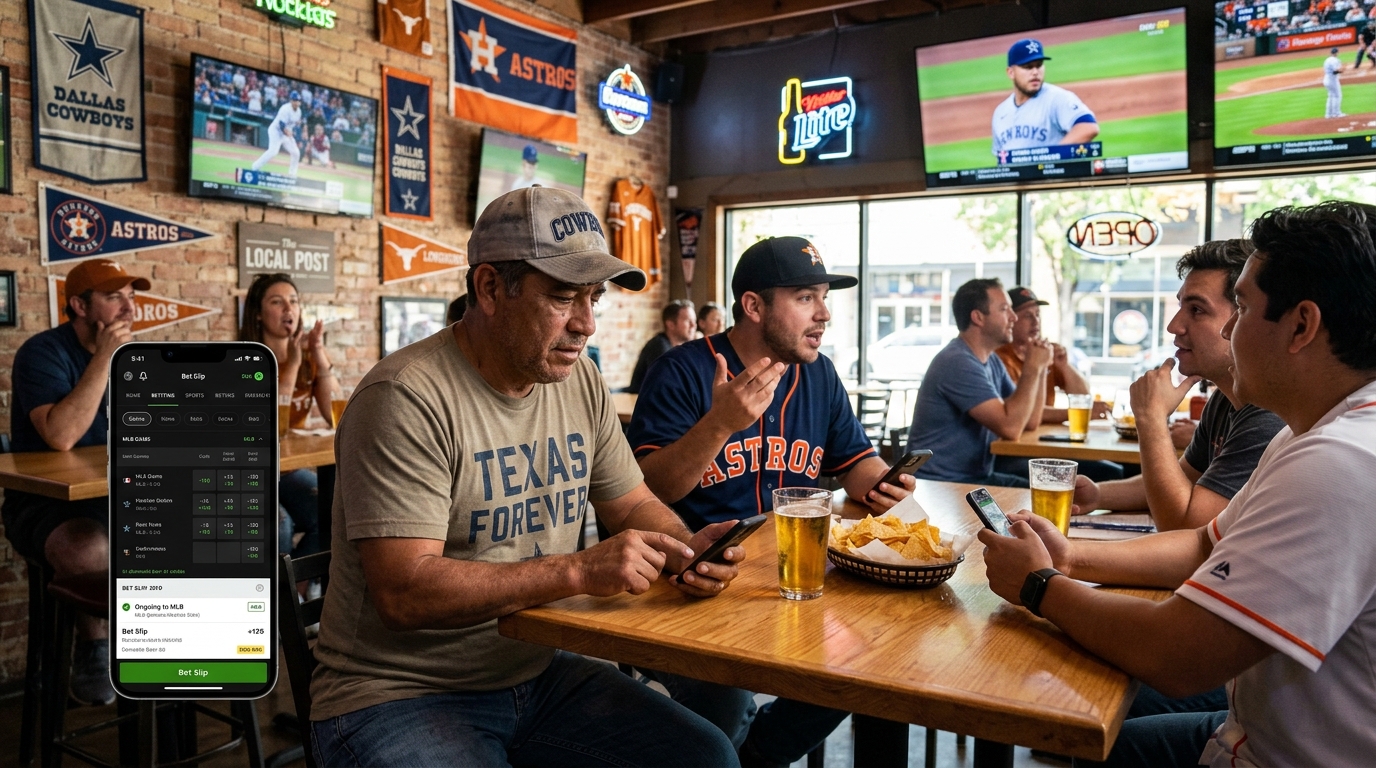
Are you curious about the status of Sports betting in Texas? Navigating the complex legislative landscape requires accurate information to ensure you wager safely and responsibly.
This comprehensive guide explains everything you need to know about Sports betting in Texas. We explore current laws, legislative efforts for 2026, daily fantasy sports alternatives, and expert tips to help you avoid illegal offshore sites while maximizing your legal entertainment options.
The Current Legal Status of Sports Wagering
The legal landscape surrounding Sports betting in Texas remains strict and largely prohibitive. Currently, traditional retail and online sports wagering are completely illegal. Under Texas Penal Code 47.02, participating in unauthorized gambling constitutes a Class C misdemeanor. Lawmakers continue to debate potential changes, but as of 2026, residents cannot legally access standard online sportsbooks like they can in neighboring Louisiana or Arkansas.
While the Supreme Court struck down the Professional and Amateur Sports Protection Act (PASPA) in 2018, giving individual states the power to regulate wagering, Texas has consistently resisted gambling expansion. The state constitution explicitly outlaws most forms of gambling. Changing this requires a constitutional amendment, which demands a two-thirds supermajority vote in both the Texas House and Senate, followed by voter approval in a statewide referendum.
Understanding the difference between legal options and illegal offshore markets is critical for your financial safety. Offshore platforms often aggressively market to Texans, creating confusion about what is actually allowed. We highly recommend familiarizing yourself with the Texas State Law Library guidelines on sports gambling to stay informed on the exact statutes governing your area.
Mini-conclusion: Traditional sports wagering remains illegal in the Lone Star State. Bettors must stay vigilant and avoid unregulated platforms that falsely advertise legal operations within state lines.
Legislative History and 2026 Updates
Advocates for Sports betting in Texas have made numerous attempts to pass enabling legislation over the past several legislative sessions. During the 2023 session, a coalition of professional sports franchises, including the Dallas Cowboys and Texas Rangers, heavily backed House Bill 1942. This bill sought to legalize mobile wagering and successfully passed the House. However, it met fierce opposition in the Senate, where Lieutenant Governor Dan Patrick refused to bring it to a floor vote, citing a lack of overwhelming conservative support.
Because the Texas Legislature only meets in odd-numbered years, 2025 represented the next major opportunity for legalization. Early in 2025, proponents introduced House Joint Resolution 134, aiming to let voters decide the issue. Unfortunately, opposition remained steadfast. A unified group of lawmakers expressed strong resistance to any gambling expansion, effectively stalling the bill in committee.
Looking toward the remainder of 2026 and into 2027, advocates are recalibrating their strategies. The potential tax revenue generated from legalization remains a massive talking point. Proponents argue that regulating the market would capture millions of dollars currently lost to neighboring states and illegal bookmakers. You can track ongoing legislative efforts directly through the Texas Legislature Online portal.
Mini-conclusion: Legislative progress faces significant hurdles due to the state’s conservative political climate. While momentum exists among voters and professional sports teams, a legal market likely will not materialize until 2027 at the earliest.
Legal Alternatives: Daily Fantasy Sports and Social Sportsbooks

Since traditional Sports betting in Texas is off the table, many residents turn to legal alternatives. Daily Fantasy Sports (DFS) platforms and social sportsbooks operate in a legal gray area but remain accessible and widely used across the state.
Daily Fantasy Sports (DFS)
DFS platforms like DraftKings and FanDuel offer skill-based contests where users build fantasy rosters and compete for cash prizes. In 2016, the Texas Attorney General issued an opinion suggesting DFS constituted illegal gambling. However, companies contested this interpretation, and major DFS operators continue to serve Texas residents without facing criminal prosecution. More recently, platforms have introduced “pick’em” style games, where users predict whether a player will exceed or fall short of a specific statistical metric.
Social Sportsbooks and Sweepstakes Casinos
Social sportsbooks present another legal avenue for sports enthusiasts. These platforms use a sweepstakes model to remain compliant with state laws. Instead of depositing real money to place a bet, users acquire virtual currencies (often called Gold Coins) to play for fun. Operators then provide “Sweepstakes Coins” as a promotional bonus, which users can use to make predictions and potentially redeem for real cash prizes.
If you decide to explore these platforms, reviewing our DFS Strategy Guide will help you understand bankroll management and how to spot value in player projections.
Mini-conclusion: While traditional sportsbooks remain blocked, Texans can legally participate in DFS contests and social sportsbooks, providing a safe and engaging alternative to illegal markets.
Comparison Table: Traditional Sportsbooks vs. Legal Alternatives
Understanding the differences between prohibited sportsbooks and accessible alternatives helps clarify what you can legally enjoy.
|
Feature |
Traditional Sportsbooks |
Daily Fantasy Sports (DFS) |
Social Sportsbooks |
|---|---|---|---|
|
Legal Status in Texas |
Illegal |
Operates (Legal Gray Area) |
Legal (Sweepstakes Model) |
|
Wager Type |
Direct bets on game outcomes |
Skill-based player rosters |
Virtual currency predictions |
|
Cash Deposits |
Real money wagers |
Real money entry fees |
Purchases of virtual coins |
|
Prize Redemption |
Direct cash withdrawals |
Cash tournament prizes |
Sweepstakes coin redemptions |
|
Regulation |
None (in Texas) |
Self-regulated/Contested |
Federal sweepstakes laws |
Common Mistakes to Avoid for Texas Bettors

Navigating the restrictions around Sports betting in Texas requires discipline and awareness. Many enthusiastic fans make critical errors that jeopardize their financial security and legal standing.
First, never use offshore sportsbooks. These unregulated websites operate outside of United States jurisdiction. If an offshore bookmaker decides to freeze your account or refuse a payout, you have zero legal recourse. The risk of identity theft and financial fraud is extremely high.
Second, avoid using Virtual Private Networks (VPNs) to access legal sportsbooks in other states. Legal operators use highly sophisticated geolocation software to verify your physical location. If they detect a VPN, they will immediately permanently ban your account and confiscate any funds you have deposited. If you want to place a traditional wager, you must physically travel to a legal jurisdiction.
Third, do not assume all fantasy platforms are identical. Read the terms of service carefully. Understanding the specific payout structures and entry rules prevents you from losing money due to technical misunderstandings. Review our Bankroll Management principles to ensure you never risk more than you can afford to lose.
Mini-conclusion: Protecting your identity and funds is paramount. Always reject offshore platforms and strictly adhere to the terms of service of legal DFS and social sportsbook operators.
Pro Tips and Expert Insights
To maximize your entertainment while navigating the laws regarding Sports betting in Texas, rely on expert strategies that focus on legal compliance and analytical thinking.
Tip 1: Master Player Prop Projections
Since DFS pick’em games represent the closest legal alternative to traditional wagering, focus your research on individual player performance. Analyze historical data, weather conditions, and matchup advantages. Identifying discrepancies between an operator’s projection and your analytical model is the key to long-term success.
Tip 2: Capitalize on Promotional Offers
Social sportsbooks and DFS platforms heavily incentivize new users. Take full advantage of deposit matches and free entry promotions. However, always read the fine print. Ensure you understand the playthrough requirements before committing any of your own capital.
Tip 3: Track Legislative Changes
The legal landscape can shift rapidly. Stay informed by following reputable gaming news outlets like Legal Sports Report, which provides constant updates on state-by-state legislative efforts. Being aware of changing laws ensures you are ready the moment new legal options become available.
Mini-conclusion: Treating legal alternatives with the same analytical rigor as traditional sports wagering improves your success rate. Stay educated, research thoroughly, and always prioritize value over emotion.
The Economic Impact of Legalization

The debate over Sports betting in Texas extends far beyond mere entertainment; it is fundamentally an economic issue. Proponents argue that a regulated market would bring a massive influx of tax revenue to the state.
Currently, millions of dollars flow out of Texas annually. Residents frequently drive across the border to Louisiana to place wagers, contributing to a neighboring state’s tax base. Furthermore, the illegal offshore market captures an enormous amount of untaxed capital. Economic analysts suggest that capturing and taxing this existing behavior could generate hundreds of millions of dollars for Texas public schools, infrastructure, and property tax relief.
Opponents, however, cite the social costs of gambling addiction. They argue that the state would need to heavily fund problem gambling resources to offset the negative impacts of widespread legalization. Any future legislation must carefully balance this economic potential with robust consumer protections.
Mini-conclusion: The economic arguments for legalization are compelling, highlighting massive potential tax revenues. However, legislators must address the social implications before any framework can gain the necessary supermajority support.
Conclusion
Understanding the rules governing Sports betting in Texas empowers you to make safe, legally sound decisions. While traditional sportsbooks remain illegal, daily fantasy sports and social sportsbooks offer engaging, legal alternatives for sports fans. Stay vigilant against unregulated offshore sites, track ongoing legislative efforts, and always prioritize responsible bankroll management. Start exploring legal DFS platforms today to elevate your sports viewing experience safely.
FAQs
1. Is Sports betting in Texas currently legal?
No. Traditional retail and online sports wagering are strictly prohibited under Texas law as of 2026.
2. Can I use a VPN to bet on sports while in Texas?
No. Legal sportsbooks use advanced geolocation software. Using a VPN violates their terms of service, resulting in immediate account bans and the confiscation of your funds.
3. Are daily fantasy sports (DFS) legal in Texas?
DFS operates in a legal gray area. While the Attorney General issued a negative opinion in 2016, major operators continue to offer contests to Texas residents without facing prosecution.
4. What is a social sportsbook?
A social sportsbook operates under sweepstakes laws. Users do not wager real money directly; instead, they use virtual currency to make predictions and can redeem promotional coins for cash prizes.
5. Why is sports wagering illegal in Texas?
The Texas Constitution explicitly prohibits most forms of gambling. Changing this requires a constitutional amendment, which demands a two-thirds vote in the legislature and public approval.
6. Will Texas legalize sports betting in the near future?
Legislative efforts failed in 2023 and 2025. Because the legislature meets biennially, the next major opportunity for legalization will not occur until 2027.
7. Can I travel to another state to place a legal bet?
Yes. If you physically cross the border into a state with legal mobile wagering, such as Louisiana or Arkansas, you can legally place bets using your smartphone.
8. Why should I avoid offshore sportsbooks?
Offshore sportsbooks operate illegally without state regulation. They offer no consumer protection, meaning your personal data is at risk, and the operator can refuse to pay out your winnings.
9. Do Texas professional sports teams support legalization?
Yes. A large coalition of professional franchises, including the Dallas Cowboys, Texas Rangers, and Dallas Mavericks, have actively lobbied the legislature to regulate the market.
10. Where would the tax revenue go if Texas legalized the market?
Proposed bills have suggested directing tax revenue from sports wagering toward public education, infrastructure improvements, and property tax relief initiatives.
